Greetings
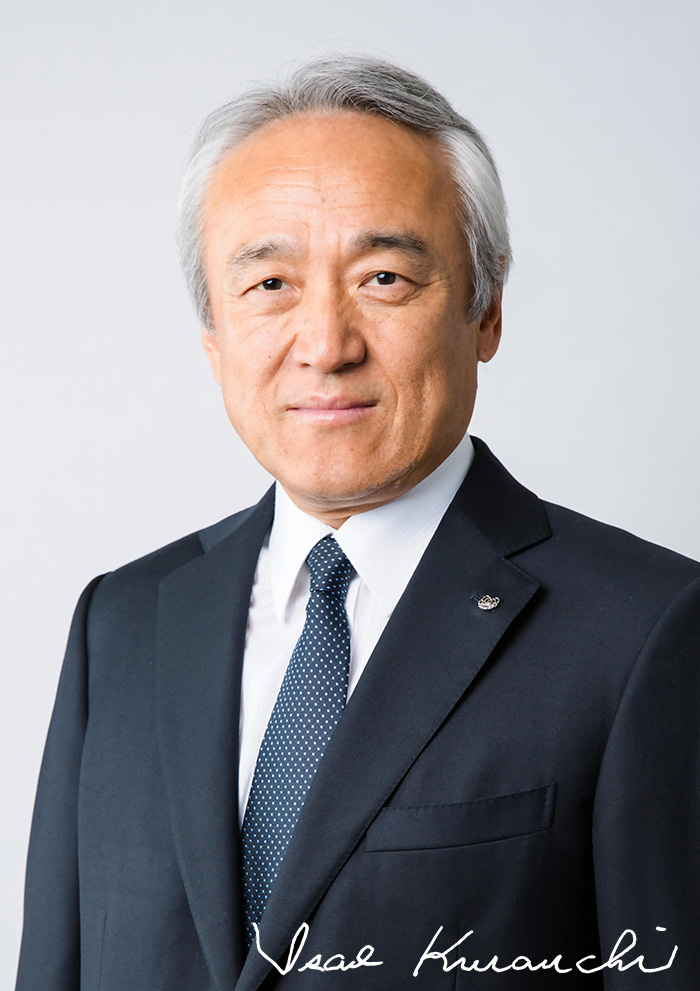
Isao Kurauchi D.V.M,Ph.D.
President JVMA
As we welcome the new year of Reiwa 8, I believe that all local veterinary associations, member veterinarians, and related organizations will be welcoming the new year with renewed spirits. I hope that you will all have a healthy and wonderful year, and I would like to ask for your continued guidance and support for our Society.
The outbreak of COVID-19 is still fresh in our memories, many people have calmly accepted the outbreak, and it is said that we have become a society that can coexist with infectious diseases. However, at the time of the pandemic, which left a vivid impression,
We must prepare for the necessary response while the experiences and memories of the disaster are still clear.
In this situation, the Japan Veterinary Medical Association has decided to hold its regular general meeting, board meetings, and various other meetings and events in person from April 2022. Currently, since 2024, meetings have been held using a combination of in-person and online meetings, or online meetings, taking advantage of the benefits of online meetings.
As I have already informed you, I had appointed as the President-elect of the World Veterinary Association (WVA) in April 2024, serving for a two-year term.
This is the first time I have been appointed to this position. I will be assigned as a president incoming April. I would like to express my sincere gratitude to everyone for their support.
Furthermore, my two-year term as FAVA President came to an end at the 46th Federation of Asian Veterinary Associations (FAVA) General Assembly held in Daejeon, South Korea in October 2024, and the 23rd FAVA Congress that followed. I was succeeded by South Korean President Ho, who made a strong statement of his hope that he would take over the One Health initiative, which has grown significantly, and that he hoped for the cooperation of all members to further contribute to the health of local people, animals, and the environment. I therefore took up the newly established position of advisor and will continue to contribute to the further development of FAVA.
At the FAVA conference held in Bangkok, Thailand last November, powerful statements were made about the promotion of One Health. Furthermore,
The determination was expressed to eradicate rabies from the Asian region, and all participants agreed to work together.
At the 82nd Ordinary General Meeting and Board of Directors meeting held on June 25th of last year, I was elected as Chairman, and officers were re-elected, resulting in a new executive structure. During my new two-year term, I will work diligently on issues to further the development of the
veterinary profession. As always, the relationship between the Japan Veterinary Medical Association and the Japan Veterinary Medical Federation will be one and the same, working together like two wheels of a cart, as we work hard to resolve various issues.
I would also like to mention that in July of last year I was appointed to the important position of Chairman of the National Association of Prefectural Assembly Speakers, and immediately afterwards I made a request to the government regarding the promotion of One Health and the improvement of the treatment of veterinarians, and was able to speak to the Prime Minister and other cabinet ministers directly.
On New Year's Day in 2024, an earthquake measuring 7 on the Japanese seismic intensity scale occurred on the Noto Peninsula in Ishikawa Prefecture. The Japan Veterinary Medical Association has set up a Japan Veterinary Medical Association Crisis Management Office, which has been working with veterinary associations in affected prefectures since immediately after the disaster occurred to take measures.
It is best to avoid disasters, and we must be careful when making statements, considering the people who have been affected. However, we are working to improve the Crisis Management Office established within the Japan Veterinary Medical Association so that we can respond smoothly and quickly to the needs of society in the event of an emergency.
The World Health Organization (WHO) continues to classify natural disasters into three categories: biological disasters such as infectious diseases, meteorological disasters such as typhoons, and geological disasters such as earthquakes, and calls for advance preparations for each type of disaster. Japan has experienced meteorological and geological disasters such as typhoons, torrential rains, earthquakes, and volcanic eruptions throughout the country, from Hokkaido to Kyushu, making it a country prone to natural disasters. As is increasingly being reported in the media, in the event of a future disaster such as a large-scale earthquake with an epicenter, major flooding, or an outbreak of an emerging or re-emerging infectious disease, we must not neglect to prepare, in accordance with the Guidelines for Establishing a Crisis Management Office, to respond quickly to any damage that may occur to the lives and bodies of our member veterinarians, as well as to the officers and staff of our Society and local veterinary associations, and to the operations of both associations and veterinary medicine in Japan.
We are also aiming to institutionalize VMAT as a certified veterinarian specializing in disasters.
We will continue to develop a relief system, including training and registering VMAT members and establishing a nationwide dispatch system, and will continue to provide support in the event of an emergency disaster.
We would like to prepare to support animal rescue activities and the restoration of veterinary medical care systems in the affected areas.
As for the future activities of veterinarians, we believe that we need to further raise the social status of veterinarians and promote various activities with a broad perspective not only in Japan but also around the world, as symbolized by One Health.
To achieve this, we must proactively address the various issues surrounding veterinarians more than ever before, through collaboration and cooperation with local veterinary associations and member veterinarians, as well as related domestic organizations, government agencies, and educational institutions, as well as international organizations such as the World Organization for Animal Health (WOAH (OIE)) and the World Health Organization (WHO). Furthermore, I believe that we veterinarians have the ability to make the world a better place through our profession. I believe that the One Health concept provides a platform for creating this influence. Now is the time for veterinarians around the world to unite. I would appreciate your continued support.
Regarding the promotion of One Health, in August 2024, the Federation of Asian Veterinary Associations (FAVA), of which I was the president, signed a memorandum of understanding (MOU) with the Medical Association of Asia and Oceania (CMAAO) to promote One Health activities in Manila, Philippines. The Japan Veterinary Medical Association has already signed memorandums with the Japan Medical Association and the World Medical Association, so we will continue to work together to promote One Health.
The foundation for cooperation from Japan to Asia, and from Asia to the world, has now been firmly established. To further develop the initiative, we must make plans, prepare with the cooperation of all parties involved, and act toward the goal of building a healthy and sustainable world through One Health.
Furthermore, the Basic Policy on Economic and Fiscal Management and Reform (Basic Policy) 2024 published by Japan government clearly states that the nation will tackle the issue of zoonotic disease countermeasures, such as the online implementation of procedures related to the Rabies Prevention Act, based on the One Health approach. The Basic Policy 2025 also states that the promotion of DX will continue, with the government promoting the digitalization of administration as a digital government. Furthermore, the Japan Veterinary Medical Association has been at the forefront of efforts to combat zoonotic diseases, including COVID-19, based on the concept of One Health. In order to continue to address issues such as zoonotic diseases and drug resistance, it is necessary to take measures not only within Japan, but also across the world.
We must work together in Asia and around the world to come up with effective countermeasures.
Regarding measures to promote antimicrobial resistance (AMR), based on the AMR Countermeasures Action Plan (2023-2027) published by the government, we are to consider specific measures for cooperation in dissemination and awareness-raising, monitoring surveys, etc., and for the appropriate and careful use of antimicrobials, particularly in small animal clinical settings. However, last year's cooperation with the Ministry of Agriculture, Forestry and Fisheries and the Ministry of Health, Labour and Welfare was limited to participation in meetings, etc., and specific measures must be reconsidered and put into action.
Some doctors are already working on AMR countermeasures, and although trend surveys and monitoring in the livestock industry are progressing, overall efforts are still need to be improved, and the Japan Veterinary Medical Association is working besides the perspective of supporting the government's action plan. Furthermore, by utilizing the strengths of the veterinary association and with the cooperation of our doctors, we are working to collect data on the amount of antimicrobial use in the small animal field and to utilize our connections with treating veterinarians.
It is necessary to instruct and educate pet owners on how to use the drug carefully.
The Japan Veterinary Medical Association is the designated registration organization for the legal registration of microchips (MC) for dogs and cats for sale. However, as a result of raising the fees, which was the biggest problem, from April 2024, the financial pressure caused by this project has been alleviated. However, although preparations have been made to a considerable extent regarding the fitting and registration of MCs in dogs and cats for sale by discussing specific items, making requests, and proceeding with the procedures, the bill has not yet been debated in the Diet, and partial amendments to the Animal Welfare and Management Act have not yet been made. We will continue to work with the relevant parties on this matter and move forward in a way that is acceptable to our members and other stakeholders.
In relation to this, in order to improve convenience for local governments and owners, we are working to incorporate the Japan Veterinary Medical Association's management system for dog registration fees and rabies vaccines under the Rabies Prevention Act into the Ministry of Health, Labour and Welfare's digital transformation
of procedures related to the Rabies Prevention Act. We are also considering, explaining and requesting the promotion of smooth support, such as promoting dog registration, ensuring the collection of registration fees, and maintaining and improving vaccination rates.
As we did last year, we would like to ask local veterinary associations to work together with us to promote the single contracting of all rabies prevention programs from municipalities in order to ensure the smooth operation of the rabies vaccination program under any circumstances, and to work with us to establish an even smoother and more effective operational system, along with the MC statutory registration program. Such fundamental improvements to the system will lead to improved benefits for dog and cat owners and the general public and are expected to contribute greatly to strengthening the foundations of veterinary association organizations, so we once again ask for your understanding and cooperation.
The third national examination for the new national qualification of companion animal nurse was held in February last year, with 5,048 people passing. The total number of successful candidates is now over 28,000. We look forward to their continued success, and it will also be important for them to consider how they can contribute to society, not just their relationships with veterinarians.
The "Report on the Status of Pet Nurses as a New National Qualification (Interim Summary)" (Joint Committee of the Veterinary Affairs Council's Licensing Subcommittee and the Central Environment Council's Animal Welfare Subcommittee's Pet Nurse Subcommittee) published in March 2024 states, "In April 2023, pet nurses, who hold new national qualifications, will begin working in pet care settings, bringing about major changes to veterinary care previously provided solely by veterinarians." The report also emphasizes the importance of building a team-based veterinary care environment. When considering this team-based veterinary care, the roles of not only veterinarians but also pet nurses will become indispensable. Furthermore, we must strive to establish a system for providing advanced veterinary care and a veterinary care system in which veterinary hospitals collaborate with local communities, including by supporting elderly pet owners and rebuilding local communities.
The Japan Veterinary Medical Association has been working on issues for many years, such as eliminating uneven distribution of veterinarians in different regions and occupations, and One of the main reasons for this is the need to improve the treatment of public veterinarians and veterinarians for industrial animals. Although results have been achieved through persistent requests to date, from now on, all parties involved must come together to improve treatment, working in cooperation with local veterinary associations, related organizations, and relevant government ministries and agencies to produce results that are beneficial to all involved.
Furthermore, in order to promote the active participation of female veterinarians, such as by supporting their continued employment and return to work, the Committee for Promoting the Active Participation of Female Veterinarians will continue to consider and implement employment support measures. Based on the philosophy that "a workplace where female veterinarians can thrive is a workplace where all veterinarians, including male veterinarians, can thrive," we will strengthen our efforts to improve working conditions and the working environment. At the same time, we must consider and implement measures to encourage the recruitment of female veterinarians.
Regarding measures against livestock infectious diseases such as swine fever and African swine fever, we will continue to closely monitor the outbreak trends, and in particular, the highly pathogenic avian influenza, which first appeared in Japan last season, was the earliest and largest outbreak to date. We must also pay close attention to the outbreak status of avian influenza in wild birds and poultry throughout the country.
Following the first outbreak of lumpy skin disease in Japan in November 2024, which is designated as a notifiable infectious disease under the Animal Infectious Disease Prevention Act, and the establishment of an emergency government ordinance to implement measures equivalent to those for notifiable infectious diseases, the Society has established a Committee to Review Measures for Livestock Infectious Diseases, Such as Classical Swine Fever, to consider support for disease prevention measures by the Society and local veterinary associations as necessary. Based on the results of this review, it is the role of veterinarians to promptly establish systems, take necessary measures such as request activities, and cooperate with administrative agencies such as livestock health and sanitation centers. Additionally, the "certified farm management veterinarians" already established should be positioned as the veterinarians in charge of each farm as stipulated in the Livestock Infectious Disease Prevention Act's livestock hygiene management standards. We must work to popularize and establish systems for overall management of farm husbandry, hygiene, and business, including measures for vaccinating pig farms against classical swine fever.
Regarding the improvement and enhancement of veterinary education, the Japan Veterinary Medical Association has set the goal of providing veterinary education of
international standards and has been carrying out support activities in cooperation with the Ministry of Education, Culture, Sports, Science and Technology and veterinary universities.
In order to ensure a system for implementing experimental animal hygiene control active engagement of clinical diagnose training. and public health training, we are continuing to work to improve and enhance veterinary education in Japan through the "Veterinary Practical Education Promotion Council" in collaboration with veterinary universities nationwide and with the cooperation of agricultural mutual aid organizations.
I'm coming.
In addition, in order to further enhance the postgraduate education of veterinarians, the Council of Certified and Specialized Veterinarians, established within the Japan Veterinary Medical Association and designated by the Minister of Agriculture, Forestry and Fisheries, has made it legally possible for certified veterinarians to advertise their qualifications and titles, which are given to participants in training programs that it has evaluated and certified, and who pass the certification examination. The first seven people to pass the examination in January last year were the first to do so. This provides a place for veterinary knowledge and skills to be refined.
We believe that this program will be an attractive, lifelong learning opportunity for all veterinarians includes young ones.
The Council of Certified and Specialist Veterinarians is currently carrying out projects related to the establishment of certification fields for certified and specialist veterinarians, the evaluation and certification of certification requirements for specialty certification organizations, and the registration, management, and publication of certified and specialist veterinarians. To explain the progress of these projects, the Council of Certified and Specialist Veterinarians, which carries out certification work, was designated as a certification requirements confirmation organization by the Ministry of Agriculture, Forestry and Fisheries (Minister of Agriculture, Forestry and Fisheries) on July 24, 2024. Going forward, when organizations that meet the specialty certification requirements apply to the Council of Certified and Specialist Veterinarians, they will be re-evaluated and certified. Currently, there are seven organizations certifying certified and specialist veterinarians with 15 qualifications. Certified and specialist veterinarians will be registered with the Council of Certified and Specialist Veterinarians, and their names and qualifications will be publicly published.
On the other hand, farm management certified veterinarians have taken the "Farm Management Certified Veterinarian" training program and have been
Veterinarians who meet the qualification standards, such as having the work experience related to farm management veterinarians, will be able to take the certification exam. The Society will continue to provide information and respond to inquiries, so we ask for your cooperation. In addition, the second certification exam will be held in January this year at two locations, in Tokyo and Fukuoka.
We will provide convenience for you.
Furthermore, in order to promote international exchange in veterinary science, I, as the next president of the WVA, will take the lead in promoting the WVA and
It is necessary for us to actively participate in the activities of relevant international organizations such as FAVA. In particular, we will make thorough preparations for the Tokyo Congress of the World Veterinary Association congress, which will be held at the International Forum Venue in Yurakucho, Tokyo from April 21st to 24th, 2026, and will strive to ensure the success of the Congress, so we ask for your support and cooperation. I would also like to inform you that I will take up the position of President of the WVA during the Tokyo Congress.
Meanwhile, the Comprehensive Training and Networking Project for Clinical Veterinarians in the Asian Region, which is being carried out with funding from the Japan Racing Association and the National Horse Racing and Livestock Promotion Association, is working to improve livestock hygiene measures in the Asian region in order to prevent the introduction of transboundary infectious diseases into Japan, and by further promoting exchanges and collaboration with veterinary associations and veterinarians who have completed the training in each Asian country, great results are expected and are already being achieved.
We believe that by making international contributions through these international exchange activities, We can improve the status of veterinarians not only in Japan, but also in Asia and the world. We need people who are willing to actively participate in these activities, and your understanding and cooperation will be a great help.
Another important point is that, in order to increase the organization rate of local veterinary associations, the General Affairs Committee established within the Japan Veterinary Medical Association will continue to consider and implement measures to strengthen the organization of veterinary associations as appropriate, such as providing useful and attractive veterinary activities for new young veterinarians.In addition, with regard to the current efforts to reduce expenses and review the Japan Veterinary Medical Association's administrative and business operations, the Organization and Finance Subcommittee under the General Affairs Committee is taking the lead in efficiently running the occupational section committees, the Annual Conference of the Japanese Veterinary Medical Association, Animal Appreciation Day, and other events, as well as reviewing various operations and, where necessary, considering scrap-and-build measures, streamlining the secretariat system, and sound financial management, and will begin implementing these measures promptly starting this year where possible.
The Japan Veterinary Medical Association aims to contribute to the improvement of animal health and hygiene, the promotion of animal welfare and care, and the conservation of the natural environment by cultivating veterinary personnel, thereby contributing to the creation of a rich and healthy society in which humans and animals coexist. Achieving this goal would be impossible without the cooperation of our 55 local associations, and the Japan Veterinary Medical Association Secretariat will continue to provide information on our activities this year as well as use all available tools to exchange information and opinions with local associations to find out what they are looking for.
With the understanding and cooperation of the local veterinary associations, member veterinary associations, the Japan Veterinary Medical Association, and other related organizations, I will continue to work hard as the president of the JVMA to proactively tackle diverse and important issues, including reviewing and improving the organization, business, and finances of the Society, so that the JVMA can respond resiliently and flexibly to the severe social situation and further develop in line with the needs of the times. This year, too, we will continue to hold active and meaningful discussions at the Ordinary General Meeting, the National Veterinary Medical Association Presidents' Conference, the Board of Directors, the Professional Section Committees, and the Special Committees, and will take on new challenges with a new determination based on the consensus reached there. I would like to ask for your continuous understanding and cooperation.
I would like to ask for your cooperation and offer my best wishes for the New Year.

